Dreaming in Decades You Never Lived: Why Gen Z Can't Stop Romanticizing the Past
Scroll through TikTok for more than ten minutes and something weird starts to happen. Suddenly you're watching a carefully curated video of someone thrift-shopping in a vintage Levi's jacket, a Fleetwood Mac song humming in the background, golden-hour light filtering through a dusty window — and it feels like a memory. Except it isn't. Not yours, anyway. Not anyone's under the age of 35, really.
This is the TikTok nostalgia loop, and Gen Z is absolutely caught in it.
The Algorithm's Vintage Obsession
TikTok didn't invent aesthetic longing, but it sure perfected the delivery system. The platform's For You Page has an almost eerie talent for identifying what makes you feel something — and right now, what's making millions of young Americans feel something is a version of the past they only know through secondhand stories, old photographs, and carefully filtered content.
The aesthetics rotate with the seasons. Cottagecore pulls from a romanticized rural past that never really existed in the first place. Disco fever sends users deep into '70s fashion rabbit holes. Y2K nostalgia — perhaps the most ironic of them all, given that some Gen Z users were literally toddlers during it — has spawned an entire industry of low-rise jeans and butterfly clips. And then there's the big one: the soft-focus, warm-toned, Polaroid-aesthetic dream of the late '80s and early '90s, a time that many Gen Z users know primarily through their parents' photo albums and John Hughes movies.
The algorithm notices when you linger on these videos. It feeds you more. Before long, you're three hours deep into a playlist someone titled "songs for driving at night in 1987" and you have feelings about it.
Nostalgia for a Life That Wasn't Yours
Psychologists have a term for this kind of thing: anemoia, the nostalgia for a time you've never actually lived. It's that melancholy pull toward an era you only know in fragments — through movies, music, or someone else's memory. And it turns out the human brain doesn't particularly care whether a memory is authentic or borrowed. Emotionally, the sensation can feel just as real either way.
For Gen Z, who came of age during a period defined by pandemic isolation, economic anxiety, climate dread, and the relentless overstimulation of digital life, the appeal of a "simpler" past makes a certain painful kind of sense. The '70s had vinyl records and no 24-hour news cycle. The '80s had big hair and Friday night plans that didn't involve refreshing a group chat. The '90s had a kind of analog leisure — Saturday morning cartoons, mall culture, AIM away messages — that feels almost quaint now.
None of those eras were actually simple, of course. But TikTok isn't selling history. It's selling a feeling.
The Aesthetic Pipeline
What makes this phenomenon particularly interesting — and a little unsettling — is how quickly TikTok aesthetics jump from screen to shopping cart. The nostalgia loop isn't just emotional; it's deeply commercial.
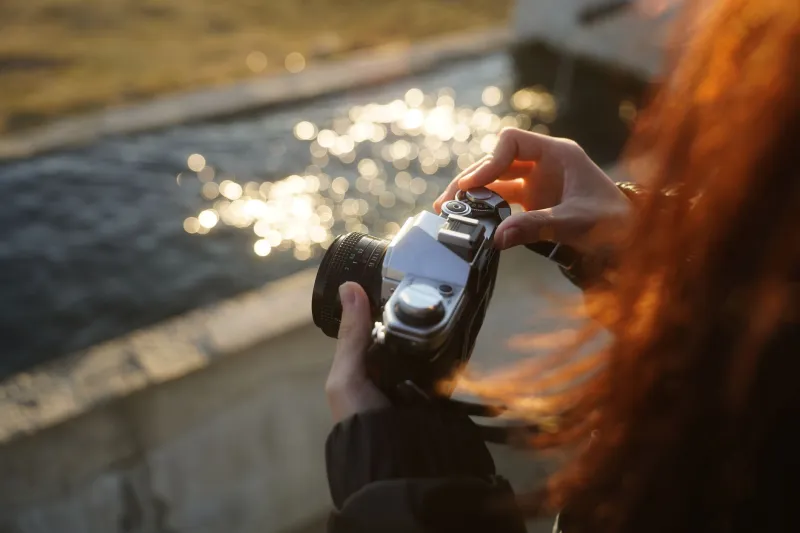
Vintage clothing resale platforms like Depop and ThredUp have seen enormous spikes in Gen Z traffic, with users specifically hunting for pieces that fit a particular decade's "vibe." Brands have caught on fast. Levi's leaned hard into '70s-era silhouettes. New Balance revived '90s dad-shoe energy and accidentally made it the coolest sneaker on the block. Even Polaroid cameras — actual, physical Polaroid cameras — staged a full comeback because the format looked right for the aesthetic.
The irony is that a lot of this "authentic vintage" content is meticulously staged. The "candid" photo taken on a disposable camera was planned, filtered, and posted with a carefully chosen song. The thrift store haul was curated for maximum visual coherence. The nostalgia is real in the sense that the emotion is genuine — but the presentation is as constructed as anything else on social media.
Escaping the Present by Borrowing the Past
There's a harder question underneath all of this: what does it say about a generation's relationship with its own present when a borrowed past feels more appealing?
Gen Z is the first generation to grow up entirely inside the internet. Their childhood memories are already tangled up with screens, platforms, and digital identities. There's a strange pressure that comes with living a life that's always been partially performed online — every milestone documented, every aesthetic phase catalogued. The past, by contrast, feels private. Untracked. Free.
The '80s feel romantic partly because nobody was posting about them in real time. The '90s feel warm and fuzzy because you can't scroll back through someone's actual lived experience of a Tuesday in 1994. All that's left is the highlight reel — the music, the fashion, the movie scenes — and highlight reels are inherently more beautiful than reality.
When your own present feels relentlessly documented and somehow still inadequate, borrowing someone else's past starts to look really attractive.
It's Not All Sad, Actually
Before we get too deep into the doom spiral here, it's worth noting that there's something genuinely creative happening inside this nostalgia wave. Gen Z isn't just consuming the past — they're remixing it. The Y2K aesthetic they're running with looks nothing like actual Y2K fashion (which was, let's be honest, pretty rough). The cottagecore they love is a fantasy, not a documentary. They're taking fragments of history and building something new out of them.
That's actually a pretty old artistic tradition. Every generation has romanticized some version of the past. The difference now is the speed and scale at which TikTok can accelerate and amplify those trends, turning a niche aesthetic interest into a global moment almost overnight.
And sometimes, a three-hour playlist called "summer nights, 1983" is just a nice way to spend a Sunday afternoon. Not everything needs a psychological diagnosis.
So What Are We Actually Looking For?
At the end of the day, the decades-you-never-lived nostalgia trend is probably less about the specific era and more about the feeling those eras represent: slowness, simplicity, community, a life lived slightly less in public view. Gen Z isn't really longing for the actual 1970s — with all its very real problems — they're longing for the idea of a life that felt more grounded and less optimized.
TikTok, in its infinite algorithmic wisdom, has figured out how to sell that feeling on a loop. And honestly? Given everything going on in the actual present, it's hard to blame anyone for clicking play.
Just maybe come up for air every once in a while.