Perfectly Predicted, Completely Bored: How Hyper-Personalization Stole the Magic of Discovery

Remember the last time someone handed you a burned CD — no tracklist, no warning — and you just had to sit with it? Or when a college roommate forced you to watch some weird indie film you'd never have picked yourself, and it quietly became one of your favorites? That feeling, that slightly uncomfortable, slightly thrilling experience of encountering something outside your lane, is getting harder and harder to come by. And the culprit isn't your taste. It's the machine that's been quietly perfecting it.
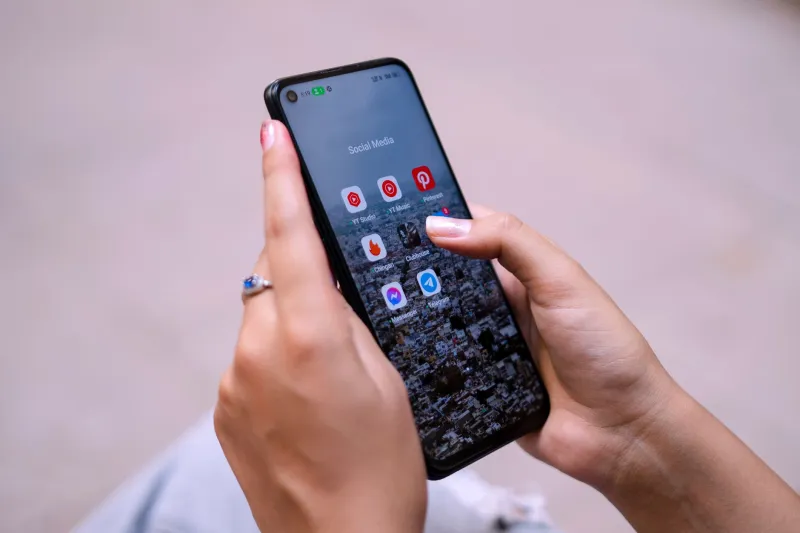
We are living in the golden age of personalization. Netflix knows which thumbnail will make you click. Spotify has a playlist for your 2 a.m. mood you didn't even know you were in. TikTok's For You Page feels less like a content feed and more like a mind reader with an entertainment budget. And on the surface, that sounds great — who wants to wade through garbage to find something good? But underneath all that frictionless convenience is a slow, creeping loss that most of us haven't fully named yet.
We've traded the mess of discovery for the comfort of confirmation. And it's making us less interesting people.
The Echo Chamber You Actually Wanted
Here's the thing about algorithmic echo chambers: we didn't stumble into them. We asked for them. Every time you skipped a song, clicked away from a show after ten minutes, or double-tapped a video that matched your existing worldview, you were training a system to build you a tighter and tighter bubble. The algorithm isn't some shadowy villain — it's a very eager student doing exactly what you taught it.
The problem is that our in-the-moment preferences and our long-term growth as curious humans are not the same thing. In the moment, you want comfort food. Over a lifetime, you need the stuff that challenges your palate. Algorithms are optimized for the former, almost constitutionally incapable of serving the latter.
Researchers have been poking at this for years. Studies on music streaming behavior consistently show that listeners cluster into tighter and tighter genre pockets over time — not because their taste naturally narrowed, but because recommendation engines kept serving them slight variations of what they already liked. It's the entertainment equivalent of eating the same meal every day because a robot determined it was statistically your favorite.
What a Friend Recommends vs. What an Algorithm Serves
Think about the best recommendation a real person ever gave you. Chances are, it came with a little friction. Maybe your friend said, "I know this isn't usually your thing, but just trust me." Maybe a stranger on a Reddit thread described a show so passionately that you gave it a shot despite the premise sounding completely unappealing. Human recommendations carry context, personality, and a certain beautiful irrationality. They factor in who you are, not just what you've clicked on.
Algorithms don't do irrationality. They don't know that you're going through something and need to watch a disaster movie to feel better about your own life. They don't know that your friend's obsession with a true crime podcast about a topic you'd normally skip actually ended up rewiring your entire perspective on the criminal justice system. They know your data. They don't know you.
And there's something else real recommendations do that algorithms can't replicate: they create shared culture. When your whole friend group gets hooked on the same show because someone in the group pushed it on everyone, that becomes a reference point, a bonding moment, a piece of your collective story. Algorithmic discovery is inherently solitary. Your personalized queue is yours alone, curated for an audience of one.
The Serendipity We Stopped Budgeting For
There's an old-school word that's worth bringing back into the conversation: serendipity. It's that happy accident of stumbling onto something you didn't know you needed. The song that came on shuffle at exactly the right moment. The book you grabbed off a library shelf because the spine looked cool. The channel you landed on at midnight because the remote was too far away.
Modern entertainment infrastructure has essentially engineered serendipity out of existence. Every platform is designed to minimize the chance that you'll encounter something random — because random is inefficient, and inefficiency is bad for engagement metrics. But engagement metrics don't measure growth. They don't measure the kind of slow, surprising expansion of your worldview that happens when you're genuinely caught off guard by something great.
Some platforms have started to acknowledge this. Spotify's "Discovery Weekly" and "Radio" features gesture toward novelty, but they're still deeply tethered to your existing taste profile. It's serendipity with training wheels — curated randomness, which is kind of an oxymoron. Even TikTok, which gets credited with surfacing niche content, is still optimizing for retention, not revelation.
When Everything Fits, Nothing Surprises
Here's a test: when was the last time something you watched, listened to, or read completely blindsided you — in a good way? Not just exceeded expectations, but genuinely came out of nowhere and cracked something open in you?
If you're struggling to answer that, you're not alone. There's a creeping cultural flatness that sets in when your entire media diet is optimized for satisfaction. Satisfaction is fine. Satisfaction keeps you subscribed. But it doesn't push you. It doesn't embarrass you with how much you ended up loving something you thought you'd hate. It doesn't give you that slightly disorienting feeling of realizing your taste just expanded.
Some people are fighting back in small, deliberate ways. There's a growing micro-trend of "blind watching" — committing to a film or show with zero prior research, no trailers, no reviews. Others are reviving the old practice of asking friends for recommendations with one rule: no genre constraints. A few brave souls are even letting other people control their playlists for a full week. It sounds almost radical in 2025, and maybe that's exactly the point.
Reclaiming the Uncomfortable Middle
None of this is an argument for going full Luddite and canceling your subscriptions. The algorithm has genuinely improved daily life in a hundred small ways, and pretending otherwise is just nostalgia cosplay. But there's a real case to be made for intentionally introducing friction back into how you consume entertainment.
Let a friend pick the movie this weekend, no vetoes allowed. Follow a music account that covers a genre you've actively avoided. Say yes to the book your coworker won't stop talking about even though the cover does nothing for you. These aren't grand gestures — they're tiny recalibrations that remind you that your taste is not a fixed, finished thing. It's still being built. It should still be surprising you.
The algorithm is very good at giving you what you want. The question worth sitting with is whether what you want and what you need from entertainment are actually the same thing. Spoiler: they're probably not. And that gap — that weird, uncomfortable, occasionally wonderful gap — is where the best discoveries still live.