No Filter, No Problem: How Chaotic Honesty Became the Hottest Thing in Entertainment
There was a moment — not that long ago — when the influencer playbook was pretty clear. Good lighting. Aspirational lifestyle. Carefully worded captions. A brand deal that made sense with your aesthetic. Keep it positive, keep it pretty, keep it palatable to the widest possible audience.
That era isn't dead, exactly. But it has serious competition. And the competition looks absolutely unhinged.
The most talked-about names in entertainment right now aren't the most polished. They're the most unfiltered. The podcasters who say the thing everyone else is thinking but no one would dare put on record. The comedians whose sets feel less like performances and more like emotional confessions with punchlines. The TikTokers who built million-follower accounts on the sheer force of not caring what you think of them.
The audacity economy is real, it's profitable, and it's reshaping what fame looks like in America.
The Death of the Likability Mandate
For a long time, likability was the currency of celebrity. You wanted people to like you — universally, if possible. Controversy was managed, opinions were hedged, edges were sanded down. The goal was mass appeal.
Something shifted. It's hard to pinpoint exactly when, but somewhere in the mid-2010s, audiences started getting suspicious of too-smooth. Too-curated started to read as dishonest. And in a media environment where trust is already low and everyone assumes they're being sold something, the person who seems like they genuinely don't care what you think suddenly feels more trustworthy than the person who's clearly trying to win you over.
This is the counterintuitive logic at the heart of the audacity economy: being divisive can actually be more commercially viable than being universally liked. If half the internet hates you and half loves you, the half that loves you is intensely, personally loyal in a way that mild approval never generates.
The Podcast Chaos Merchants
Nothing has accelerated this trend faster than podcasting. The format is uniquely suited to unfiltered content — it's long-form, it's conversational, there's no editor cutting your hot take before it goes out, and the audience self-selects. If you're listening to a two-hour podcast, you're already committed. You're not scrolling past.
This has created space for a specific kind of host: the one who says genuinely surprising things. Not necessarily offensive things (though sometimes), but things that break from the expected script. Real opinions. Contradictions. Moments of actual vulnerability or actual irritation. The kind of stuff that makes you feel like you're listening to a real conversation rather than a produced segment.
Call Her Daddy, Flagrant, anything in the Barstool orbit, even the Joe Rogan phenomenon — these shows aren't loved despite their messiness. They're loved because of it. The mess is the product.
TikTok's Unhinged Creator Class
On the short-form side, TikTok has essentially built an entire creator economy around the concept of saying the quiet part loud. The most viral content on the platform tends to be someone reacting with genuine, unscripted emotion — frustration, disbelief, chaotic joy — rather than anything planned or produced.
The creators who have turned this into careers are fascinating to watch. They've figured out that the appearance of zero filter is itself a skill. Knowing which unfiltered thought to share, how to frame it, when to let a moment breathe and when to cut — that's craft. The chaos is real, but it's also managed chaos.
Sadie, a 23-year-old from Nashville who runs a TikTok account with over 400,000 followers built around her unvarnished opinions about fashion, dating, and her own bad decisions, puts it bluntly: "I think a lot about what I post. I just don't let that thinking show. People don't want to see the work. They want to feel like they caught you being real."
That's the tension at the center of all of this. Is it authentic, or is it a more sophisticated performance of authenticity?
The Authenticity Paradox
Here's where it gets philosophically tricky. The audacity economy runs on the perception of realness. But the most successful players in it are extremely deliberate about how they present themselves. The comedian who seems to be doing an unscripted rant about their personal life wrote that rant. The podcast host who "just says what everyone's thinking" has been thinking about what to say.
This doesn't make it fake, exactly. But it does complicate the idea that we're watching something raw and unmediated. What we're watching is a highly effective simulation of rawness — and we know it, on some level, and we watch anyway.
Maybe that's fine. Maybe the emotional truth of the content matters more than whether it was premeditated. A comedian making you feel genuinely seen by a joke is doing something real, even if they workshopped it for six months.
But there's a version of this that goes sideways. When "being unfiltered" becomes a brand strategy rather than a personality trait, it can curdle fast. Audiences are actually pretty good at detecting when the chaos is manufactured versus when it's genuine — and the backlash when they figure it out can be severe.
The Fashion Angle You Didn't See Coming
This shift in entertainment culture is bleeding into aesthetics and style in ways that are genuinely interesting. The "clean girl" aesthetic — perfectly pressed, matcha in hand, not a hair out of place — is facing real competition from something messier and more deliberate in its imperfection.
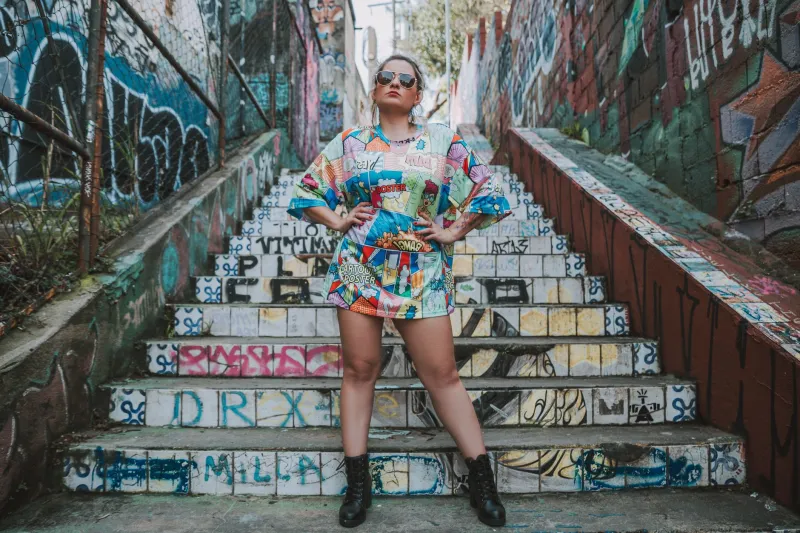
The style icons getting the most cultural traction right now are the ones who look like they got dressed for themselves, not for approval. Mismatched, layered, a little chaotic, sometimes aggressively weird. The audacity economy has a fashion arm, and it's loud.
This isn't just a trend cycle. It reflects something deeper about what we want from the people we watch and follow: proof that they're human. Proof that they made a choice that could have gone wrong. Proof that they weren't optimized.
So Who's Actually Winning?
The honest answer is: the people who found a way to be genuinely themselves and also strategic about it. The audacity economy rewards authenticity, but it rewards sustainable authenticity — the kind that can be maintained across years of output without burning out or getting canceled.
The purely calculated chaos merchants tend to flame out. The ones who last are the ones for whom the unfiltered version is actually them, just amplified and pointed in a direction.
In a media landscape built on performance, the most radical thing you can do is be genuinely, specifically, uncomfortably yourself.
Turns out that's also the most profitable thing. Go figure.