Your Streaming Queue Is a Mirror — And You Might Not Like What It Reflects
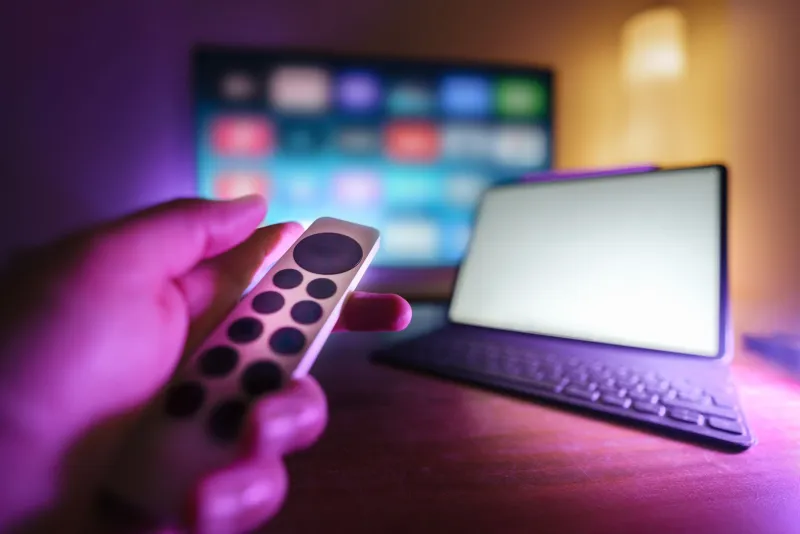
There's a particular kind of Sunday evening paralysis that millions of Americans know intimately. You open Netflix — or Hulu, or Max, or whatever you're currently paying for — scroll for twenty minutes, feel vaguely annoyed, and end up rewatching something you've already seen three times. The algorithm offered you dozens of options. You picked none of them. And somehow, that still felt like its fault.
Here's the uncomfortable twist: the algorithm wasn't wrong about you. It just showed you exactly who you've become.
How We Got Here
Recommendation engines didn't start out as cultural gatekeepers. They were convenience tools — a way to surface content you might like without forcing you to dig through a catalog the size of a small library. Netflix's early recommendation system, Cinematch, was a relatively humble thing, built to match rental patterns. That was the mid-2000s. Today, the company has publicly stated that its recommendation engine influences more than 80 percent of the content people actually watch on the platform.
Spotify's Discover Weekly, YouTube's autoplay queue, TikTok's For You Page — every major entertainment platform has built a version of the same machine. And that machine has one primary job: keep you engaged. Not challenged. Not surprised. Engaged.
"The incentive structure is completely misaligned with genuine discovery," says one entertainment industry analyst who has consulted for multiple streaming platforms. "These systems are optimized for watch time and session length. A slightly uncomfortable documentary that makes you think for three days afterward scores worse than a comfort binge you half-watched while doing laundry."
The Comfort Trap
Here's where it gets psychologically interesting. The algorithms aren't just reflecting your past choices — they're quietly narrowing your future ones. Every time you click on a procedural crime drama, the system learns to show you more procedural crime dramas. Every true crime podcast you finish trains your feed to assume that's what you want. Over time, your recommendations don't expand outward. They contract inward, wrapping tighter and tighter around a version of your taste that gets more frozen with every interaction.
Psychologists call a related phenomenon "preference falsification" — the gap between what people say they want and what they actually choose when given low-stakes, low-effort options. Algorithms exploit that gap masterfully. They're not giving you what you'd choose after careful reflection. They're giving you what you'll click on at 10 p.m. on a Wednesday when your decision-making energy is basically gone.
The result? A lot of people are consuming an enormous amount of content that feels fine — comfortable, familiar, safe — while quietly wondering why nothing feels genuinely exciting anymore.
The Serendipity We Gave Up
Ask anyone over 35 how they discovered their favorite band, their most-loved film, a book that changed how they see the world. Odds are, the story involves some form of happy accident. A friend's recommendation that seemed random. A weird late-night cable channel. Flipping through a record store bin and buying something based purely on the cover art. A film festival screening they wandered into on a whim.
None of those discovery pathways exist in algorithmic form, because algorithms aren't built to generate genuine surprise. They're built to generate predicted surprise — novelty that still falls within a calculated comfort zone. It's the cultural equivalent of an "adventurous" meal at a chain restaurant. You can get the spicy option, but someone's already decided how spicy is too spicy for the average customer.
"There's a real difference between serendipity and the simulation of serendipity," notes one film critic who writes about the intersection of technology and pop culture. "When Spotify puts an unfamiliar song in your Discover Weekly, it's not random. It's a calculated bet based on listener clusters and audio feature matching. That's not the same as your college roommate handing you headphones and saying 'just trust me.' The emotional experience is completely different."
The Echo Chamber No One Talks About
Most of the public conversation about algorithmic echo chambers focuses on news and politics — the way social media feeds can trap people in self-reinforcing information bubbles. But entertainment echo chambers are just as real, and arguably more insidious because they feel completely harmless.
When your cultural diet is algorithmically curated, you end up sharing fewer genuine discovery moments with people outside your demographic cluster. The water-cooler conversation about a weird, unexpected show you stumbled onto gets replaced by everyone watching their own personalized version of "content." Shared cultural experiences — the kind that used to generate genuine connection across different social groups — become rarer.
There's also the question of what doesn't get made. When streaming platforms use algorithmic data to greenlight new content, they're essentially letting past behavior dictate future creation. Shows that don't fit a clean genre profile, films that require patience, music that challenges before it rewards — all of it becomes a harder sell when the data says audiences keep clicking away from anything that doesn't hook them in the first thirty seconds.
So What Do You Actually Do About It?
The good news — if you can call it that — is that the fix doesn't require burning your subscriptions or going full analog hermit. It mostly requires a little intentional friction.
Some entertainment critics and self-described "active consumers" have started what amounts to a personal practice of algorithmic disruption: deliberately seeking out content through sources the algorithm can't see. Asking a human being for a recommendation. Reading a review from a critic whose taste you trust but don't always share. Watching something because a friend was genuinely enthusiastic about it, not because it appeared in your feed.
Others have started using platform features specifically designed to surface the unfamiliar — genre rabbit holes, foreign language sections, catalog deep cuts — as a way to manually break their own recommendation patterns.
The point isn't to reject convenience entirely. It's to remember that taste, real taste, is something you develop through exposure to things you didn't already know you'd love. That process can be uncomfortable. Sometimes you sit through something that doesn't work for you. Sometimes you turn something off twenty minutes in. That's not wasted time — that's how you actually figure out what you think.
The Bigger Question
There's something worth sitting with underneath all of this. We've spent years handing our cultural preferences to systems designed to keep us clicking, and in return we've gotten frictionless access to a version of entertainment that's been pre-approved by a model trained on our own past behavior. It's efficient. It's convenient. And for a lot of people, it's left a faint but persistent sense that something is missing.
The algorithm knows your taste better than you do. That much is probably true. The question is whether that's a feature you want to keep paying for — or a habit worth breaking.